
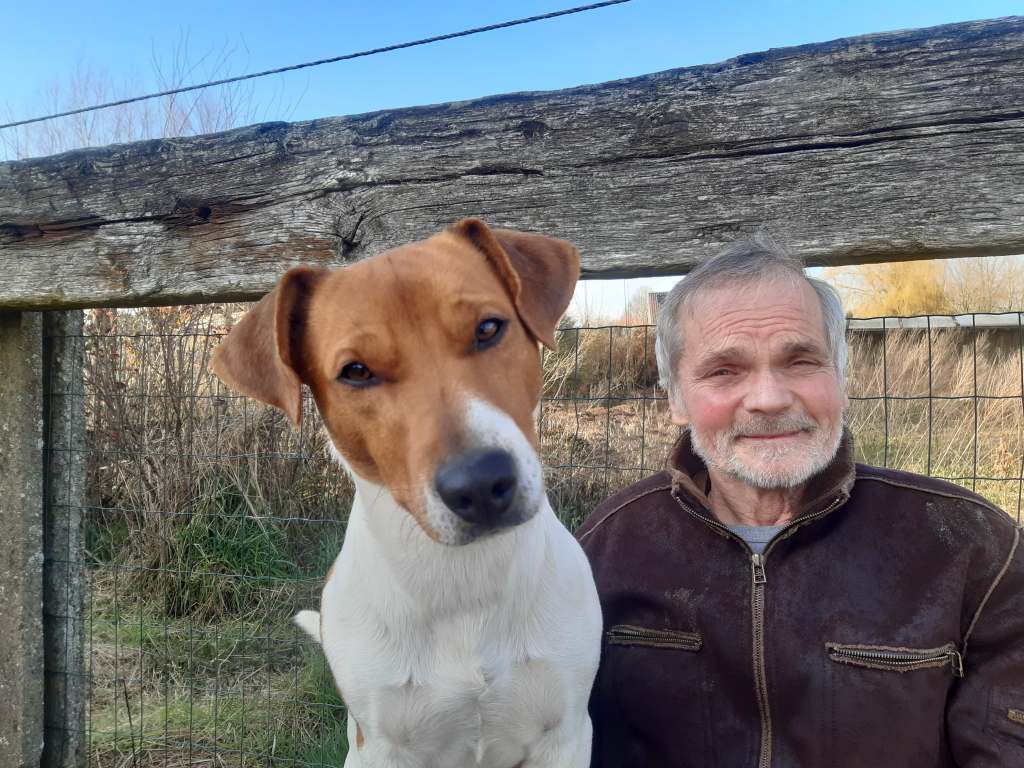
I recently had the extreme privilege of interviewing Flanders-based author, war journalist, and all-around creative mastermind Bob van Laerhoven (pictured left) about his novel Alejandro’s Lie. The novel, which won Best Political Thriller of 2021 on Best.Thrillers.com, is a masterful piece of writing that showcases Laerhoven’s experience and skill as an author with over 30 years of publishing experience across 45 books and 10 languages. Keep reading for some behind-the-scenes insight with Bob van Laerhoven!
As we know, Alejandro’s Lie takes place in the fictional country of Terreno. Could you talk about your reasoning for how you positioned Terreno in the “real world?” What drew you to South America in the 1980s as the stage for this novel?
I’ve been a travel writer for thirteen years—1990–2013—and I have visited South America multiple times. I noticed that in countries like Chile, Argentina, Bolivia, Honduras, Venezuela, Nicaragua, to name just a few, the older generation still wrestled with memories of the autocratic past and the horror it had released on the continent. Undercover of fighting communism, high-ranked military officers in several Latin American countries in the seventies and eighties seized power and installed a dictatorship. So when I was planning to write a novel as a warning against the recent emergence worldwide of new dictators, I wanted to paint as many atrocities that arise from the abuse of power as I could. But how? A Chilean friend in Belgium who had fled Chile in the seventies after being tortured by General Pinochet’s executioners advised me to develop my theme in a fictitious country. That gave me the freedom to use the atrocities in different countries in my story about General Pelarón’s junta in my made-up country Terreno. I chose the eighties as a period because the South American dictatorships and their ruthless methods during that time are examples nowadays for upcoming autocrats.
I had thought about choosing an “alternative Communist Russia” for my story. Still, although I visited Russia in the nineties, my knowledge of the country and its history is more limited than my familiarity with Latin America. Furthermore, the autocracy that Russia always has been didn’t have to deal with actual underground rebellion groups since the Communist Party ended the reign of Tsar Nikolas II in 1917. Nevertheless, I needed underground rebellion for my story like the South American dictatorships so often have known, so my choice was made. By the way, in 2016 a Russian writer who had read “Месть Бодлера,” the Russian edition of my novel Baudelaire’s Revenge, for Putin warned me: “Some of you in West-Europe think that Russia is a “sort of” democracy, but that’s not right at all. We live in a pure dictatorship.” Salient detail: she asked me not to mention her name when I quote her, so profoundly settled is the fear for Putin’s state oppression machine. If I still have the stamina, I would like to write one last novel situated in Russia. Clichés stipulate that the Latin soul is fiery and exuberant; the Slavic soul would then be brooding and deceptive. Of course, that can be partly true, but one thing is sure: abuse of absolute power in any country leads to suppression and dreadful drama.
The ensemble cast in Alejandro’s Lie is quite large and the shifting perspectives in the novel are so intricate. Did you start out with the intention of having such a large cast or did the characters develop as the story came along?
I confess: I am one of those writers who never constructs a storyline. I’ve published—traditionally—more than 45 books in Holland and Belgium, and I never started with the plotline clearly defined. Sometimes, I wish I had been an author who has set up a meticulous storyboard before starting his novel, but alas. I rely on instinctive creativity when I write the first sentence of any book. You see, the story has to be given to me. I don’t construct; I follow the Muse in my head (how romantic!). And still, many reviewers have pointed out the intricate structure of my stories. I also never had a cast of characters in my head before I started. When I’ve chosen a theme for my novel—in this case a South American dictatorship—I start reading at random about the theme. I call that “research,” but in fact, I hop from page to page on the internet until something produces a spark in me. That gives me the rudimentary outline of a character.
Let me give you a clear example: when I read about the Chilean protest singer Victor Jara and listened to his songs in which he denounced the gap between rich and poor in his country under the reign of General Pinochet, my character Victor Pérez was born. But often, the subconscious hints to create characters are not so clear cut, and I have to do a lot of modeling and remodeling. So there’s a lot of hair-pulling going on when the cast of characters is significant, as in Alejandro’s Lie. My cross-over novels between literature and the suspense genre are character-driven, so you’ll understand that I’m practically bald now. 🙂 Or, pretend to be bald because even in an interview, an author must make up stuff 🙂
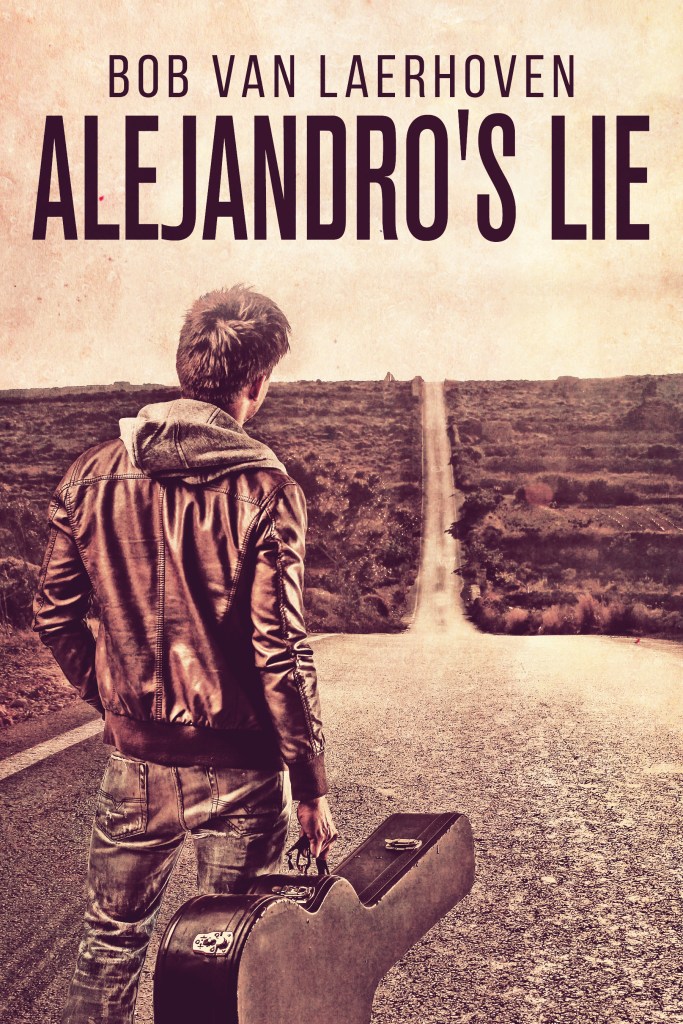
What was your favorite (or perhaps least favorite) part about writing Alejandro’s Lie?
I’ll tell you about my least favorite part, or at least the most difficult part. The scene wherein the Belgian priest René Lafarge remembers a traumatic incident when he was around twelve. With his elder brother and his fiancé, René takes the bus to Binche, a village in the southern part of Belgium where a unique carnival parade goes out every year, packed with the Gilles dressed in a costume reminiscent of the Incas. Let me tell you; I had more work and headaches with researching Binche than assembling information about the countries I would tie together in Terreno. I traveled the world but got lost in my own country 🙂
Could you talk about your general writing process? Has your process changed over the course of your writing career?
For me, writing is a magical process. I understand that this may sound overdone, but it feels that way: I rely on intuition first, then on research, and then on style. Style shapes the characters, and the characters shape style. It’s a complicated mix of feeling and thinking. The thought process happens—at least with me—outside me. I know it sounds strange, but it feels that way. Oh, sure, you can write bestsellers with books that have been meticulously planned before starting the writing process. I guess it’ll also save you time because I often have to retrace my steps when my story suddenly leaps in another direction. But it’s the way I work, and, over a period, of more than thirty years of writing and publishing 45 books, it has never changed.
Could you tell us a bit about your journey as a writer, what inspires you, what drives you, and maybe what was the biggest struggle in getting where you are in your career today?
Flanders has approximately six million people. What is the biggest struggle for a writer in such a small language community? To gather enough momentum and renown to be a full-time author. But that wasn’t the drive in the early years. I was raised in a relatively closed village community where I didn’t fit in. From my early youth, I dreamed of spreading my wings and exploring the world to learn about who I was and what we are. I admit that there were times that I doubted that the literature I wrote—mainly about the fate of individuals in a swiftly and often dramatically changing social environment—was of any use compared with the ever-growing impact of visual media and later social media. But I constantly returned to the certainty that literature can delve deeper into our souls—and, hence, into what we have made of this world—than any other art form. I’m aware that at sixty-eight, I’m in the winter of my career over here in Belgium now: I’m planning to write one last novel, and then it’s over and out. But I have a vast back catalog of books that are waiting to be translated….hint hint 😉
What’s your go-to piece of writing advice for other authors?
Write and discard, write some more and discard some more and then read read read every book you can get your hands on, and then write and pitch and publish. Other grizzled authors may give other counsel, but this was the only one that worked for me. Don’t forget I’m a self-made author; I didn’t have a higher education. So I had to learn by reading thousands and thousands of books, fiction and non-fiction. My novels may have an intellectual touch, but their foundations are rooted in a sturdy, suspenseful, classical way of telling a story.
Are you working on any new projects that you’re able to talk a bit about?
Ay ay ay, I’m sorry. In a previous interview about Alejandro’s Lie, I outlined a project that was growing in the back of my head. But, since then, another possibility has materialized in my restless brain. 🙂 So, now, I am in a dilemma: which one to pick? Therefore, I have become even more superstitious about announcing and outlining a new project. But I can tell you what I would like as a future translation project. I now have four novels translated and published in English: Baudelaire’s Revenge, Return To Hiroshima, Alejandro’s Lie, and, very recently, The Shadow Of The Mole. I would be delighted when The Firehand Files would follow. The novel is set in Germany in 1921. I’ll give you the blurb if you like:
1921. Berlin is a city of extremes. Political violence plagues the streets during the day. A serial killer whom the media call “The Skinner” roams the streets by night. The police suspect that he is a rabid World War I veteran, but he remains untraceable.
In this human pressure cooker, the relationship between the Flemish DADA poet Paul Van Ostaijen and his impetuous girlfriend Emma Clément is on edge. Like hundreds of thousands of others in Berlin, they live in poverty and are addicted to cocaine and the wild nightlife.
When an intoxicated Van Ostaijen on a whim steals the Firehand Obsession file from the apartment of the French-German spy Elise Kraiser, the poet sets in motion a series of events that shed surprising light on a politician who is gaining influence: Herr Adolf Hitler.
So, gods of literature grant me many sales of Alejandro’s Lie and The Shadow Of The Mole so that The Firehand Files can be translated….
 For Page & Screen
Pingback: “Alejandro’s Lie”: A Tale of Romance and Revolution | For Page & Screen
You have produced a brilliant interview with my dear friend and fellow author Bob Van Laerhoven. Thank you…
LikeLike
Reblogged this on Have We Had Help? and commented:
An interview with a dear friend …
LikeLike
Reblogged this on NEW BLOG HERE >> https:/BOOKS.ESLARN-NET.DE.
LikeLike
Thanks for introducing to a great author. Wonderful done! Have a beautiful weekend! xx Michael
LikeLike
Correction: to AN great author. 😉
LikeLike