When viewers think of films like From Dusk Till Dawn or the more recent Sinners, the draw of the horror Western genre is undeniable. There’s something that just fits—the lawless West, the isolation and barren landscapes, the constant danger that may be of this world or may… not. The blending inherent to the horror Western just works and, I must admit, as someone who hasn’t always enjoyed Westerns, I have to say I’m absolutely loving what horror has brought to the table.
One recent edition to the growing number of innovative horror Western films is A Town Called Purgatory (2025), directed by Matt Servitto and starring Dan DeLuca, Ken Arnold, Kevin Jiggetts, Matt Servitto, and Jeff Ricketts. This team of filmmakers boasts an impressive body of work in both mainstream and independent film. I had the personal privilege of working with many of them on one of their prior projects, The Night Watchmen, back in 2017, so I was excited to see what new perspective they brought to the horror Western genre!
“In the haunting aftermath of the Civil War, principled Yankee Lawman Beau Riffen joins forces with Cody Parnum, a tormented ex-Confederate tracker. Their quest to apprehend notorious train robbers leads them to Purgatory, a town eerily deserted. Amidst the silence, they cross paths with a lone African American trapper and a prisoner harboring secrets who whispers of an ancient menace. As the shadows of Purgatory tighten, an impending confrontation with ‘Yee Naaldlooshii’—The Skinwalker—beckons, testing bonds of trust and humanity in their gripping fight for survival.”
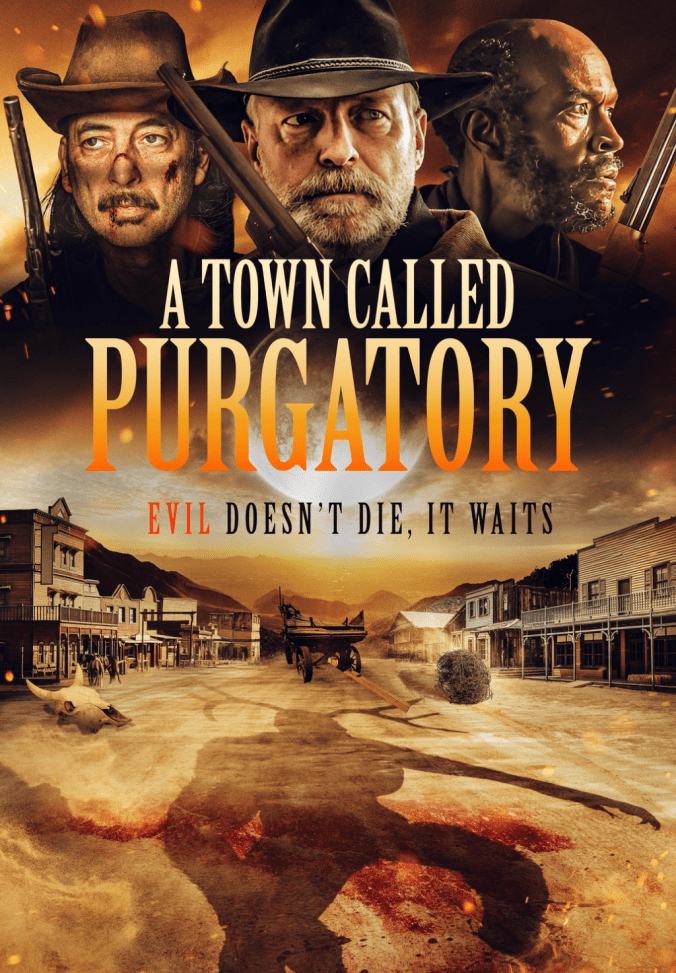
Right at the start of A Town Called Purgatory, I was struck by two things: the setting, which does a great job of avoiding the stereotypical sepia tint we sometimes find in Westerns, and the banter between the characters that immediately pulls us into the film. One of the most seamless parts of this movie continues to be that dialogue which only gets more engaging as new characters and dynamics are introduced. While not many of the main characters are particularly “chatty”—perhaps aside from Zach Steffey’s character Ezra at the start of the film—what they do say works extremely well to give us insight into who they are, the various power dynamics and struggles between them, and how they handle the growing sense of dread and fear that builds as the film shifts from its opening focus as a western to include those horror elements that really shine through in the second half. The strength of that dialogue and those character dynamics undoubtedly comes from a unique combination of experience, writing skill, and the true camaraderie that comes from a team with several films under their belt together.
Once those horror elements really come into play is where, in my opinion, the film truly shines—though as a huge horror fan, I may be biased. Between the fantastic score, the isolation of the setting, and the creeping sense of dread that comes both from rumors brought by each group of characters as they’re introduced and the flashes of scenes featuring Cat Jimenez’s character only the audience is privy to, there’s a gradual build up to when the creature is revealed and the gore starts in earnest. Personally, I think Jimenez’s cut scenes made it fairly clear what kind of monster is lurking the town of Purgatory, but that knowledge in no way took away from the impact that the monster’s presence had.
And I do want to take a second to rave about the monster in this film! Taking both folklore-based and modern horror elements for inspiration, this creature really packs a visual punch. The makeup looks fantastic and Kasiske’s motion and mannerisms play so wonderfully—and creepily—on screen, that it’s understandable why some characters seem to go a bit mad with the fear of it—I’m looking at you, Reverend Silas Fist. While I do think the contrast between the physical monster and the few instances of CGI are fairly stark, for an independent film that was born out of serendipitous circumstances, A Town Called Purgatory really makes the most of every second the monster is on screen.
It’s really that attention to detail and dedication to ensuring everything on screen matters that shows the passion and skill of the filmmakers who made A Town Called Purgatory a reality. I had the pleasure of speaking with writer and actor Dan DeLuca about the making of this film, as well as his experience and work as a filmmaker in general, and hearing him speak about all of the attention to detail that went into creating this truly immersive old West setting makes the film all the more impressive! If you want to hear more about Dan’s insight into the world of independent film and get behind-the-scene’s stories about A Town Called Purgatory, you can listen to our full interview below or anywhere you listen to podcasts!
I also highly recommend that you take the time to watch A Town Called Purgatory, available on Apple TV, Prime Video, Fandango, and a variety of other streaming services! I promise it’s worth the watch!
Listen to our interview with Dan DeLuca here!
 For Page & Screen